
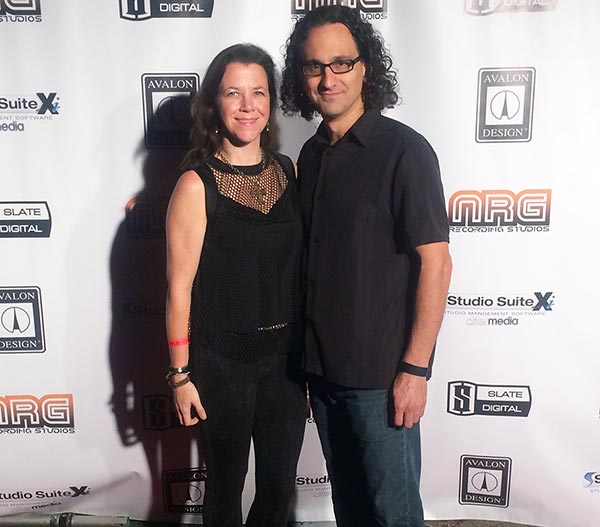
Jay Frigoletto is a 30-year veteran with over a decade of experience as an educator, developing and teaching college courses in applied physics, acoustics, audio & media technology, digital signal processing, forensic audio, and sound restoration.
Mr. Frigoletto is also accomplished in music recording and sound for picture, having worked on projects including the X-Men II soundtrack, Touched by an Angel for CBS television and music credits from Black Eyed Peas, Alice in Chains, Ani DiFranco, Oasis, Clay Walker, and The Yellowjackets. Albums containing his work have received gold, platinum, and multi-platinum record awards, 8 Grammy and Latin Grammy nominations, and a 2004 Grammy Award.
We design and build custom architectural spaces with a focus on the performance of sound. We consult on a variety of other acoustics projects including transmission reduction (soundproofing), vibration isolation, sound reinforcement system design, and enclosure design for everything from speakers to resonators to a dual-chamber, tuned Mahler box for the Cambridge Symphony Orhestra. If it makes noise, ask us about it!
Excepted here is the introduction to Jay Frigoletto's book,
Architectural Acoustics: Concert Halls to Recording Studios ©2009 Jay Frigoletto Introduction Acoustics is a far more complex subject than most people realize. Many areas of study exist in acoustics, from the behavior of musical instruments to the physiological and psychological effect of sound on humans and other animals; from structural acoustics and vibration isolation to noise control; from biomedical applications such as ultrasound, to speech and communication; and from commercial and mechanical engineering, to underwater acoustics, including applications in sonar and the effect of sound waves upon marine life. The discipline that interests us most, at least in the context of this treatise, is that of architectural acoustics. This is the study of acoustics as it pertains to the behavior of sound in buildings, its effect on the occupants, and the effectiveness of the building in performing its intended function. Even this specialty has many branches. Some may focus exclusively on large room acoustics, such as theaters, halls, concert venues, and houses of worship, while others concentrate on commercial applications, including board rooms, educational institutions, restaurants, nightclubs, and businesses. One of the most unique areas of architectural acoustics includes recording studio design, and other critical listening environments or media oriented spaces. While this most often deals with what would be considered small rooms from the perspective of acoustics, there may occasionally be live recording spaces intended for orchestral works or film scoring that will be large enough to behave as large acoustical spaces. The primary differences between acoustically large and small rooms will be in their reverberation or sound decay times, and their low frequency modal behavior. The intended uses of such spaces are also quite different, requiring different approaches to design. In addition to the requisite physics of sound, architectural acoustics projects often require other inter-disciplinary skills, from engineering issues such as HVAC (Heating Ventilation and Air Conditioning) design, electrical wiring, and equipment integration, to the more conventional design concerns, including layout and ergonomics, orientation of support spaces, and pure aesthetics.
Let us know how we can assist you in meeting your goals
8 Wildwood Drive
Brookline, NH 03033
jayfrigoletto@gmail.com
323-314-3562